In India, Gold is more than just a precious metal. It carries tradition, security, and emotional value passed down through generations. Because of this deep-rooted association, the idea of selling Gold often feels uncomfortable or even wrong. Add to that years of hearsay, outdated practices, and cautionary tales, and selling old Gold begins to sound risky, complicated, or regretful.
Many people continue to store unused jewellery in lockers, convinced that selling it will lead to loss of value, of respect, or of sentiment. The reality, however, is very different. The Gold-selling ecosystem in India has evolved significantly, making the process more transparent, regulated, and consumer-friendly than it once was. Understanding and breaking these myths is the first step toward seeing old Gold for what it truly is: a financial resource that can be used wisely, without guilt or fear.
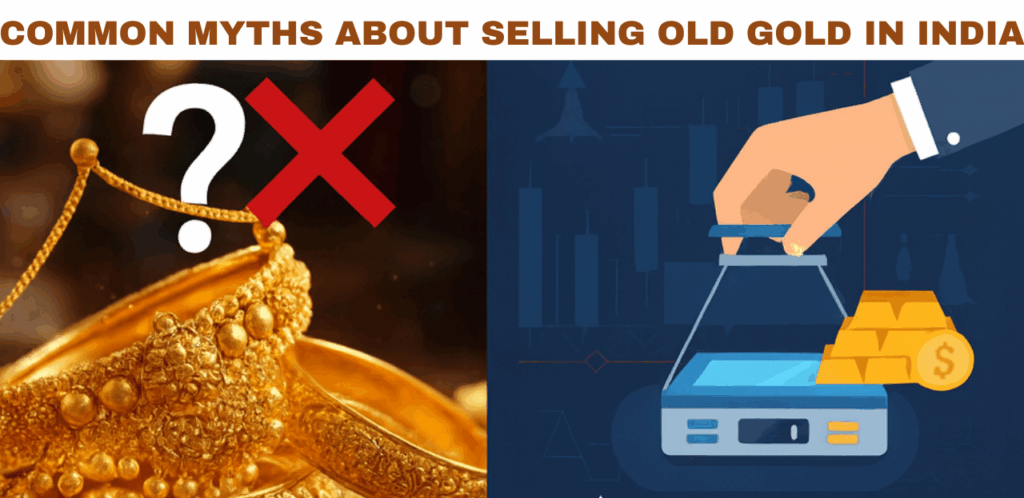
Here are 7 myths about selling Old Gold in India
Myth 1: Selling old Gold means emotional loss
Many people believe selling Gold is equivalent to letting go of memories. In reality, emotions are tied to moments, not metal. Old or unused jewellery lying in lockers can be transformed into funds for something meaningful, whether it’s education, a new home, or a fresh investment.
Myth 2: You will never get the right price
There’s a strong belief that sellers are always underpaid. The truth is that Gold is valued based on purity and prevailing market rates. With transparent pricing, digital weighing, and proper testing methods, sellers today can receive fair value for their Gold.
Myth 3: Only jewellery bought from a branded store can be sold
Gold does not lose its value because of where it was purchased. Whether it’s inherited jewellery, unbranded ornaments, broken chains, or coins, Gold is Gold. As long as purity is assessed, it can be sold.
Myth 4: Selling Gold involves complex paperwork
Many assume the process is long and documentation-heavy. In reality, most sellers only require basic identity proof. The process has become far simpler and faster than it once was.
Myth 5: Old or damaged jewellery has no value
Broken bangles, single earrings, or tangled chains are often dismissed as useless. But Gold is valued by weight and purity, not appearance. Even damaged jewellery holds intrinsic value.
Myth 6: It’s better to keep Gold even if you don’t need it
Holding onto unused Gold doesn’t always make financial sense. Selling old Gold at the right time can help you rebalance finances, meet immediate needs, or reinvest in forms of Gold that align better with your goals.
Myth 7: The process is unsafe or unreliable
This myth stems from older, informal practices. Today, regulated and transparent systems, proper testing methods, and instant payments have made selling Gold safer and more trustworthy.
Final Thought
Selling old Gold is not a sign of distress or compromise; it is a conscious financial decision. When done with awareness and the right information, it allows you to unlock value from an asset that may otherwise remain idle.


