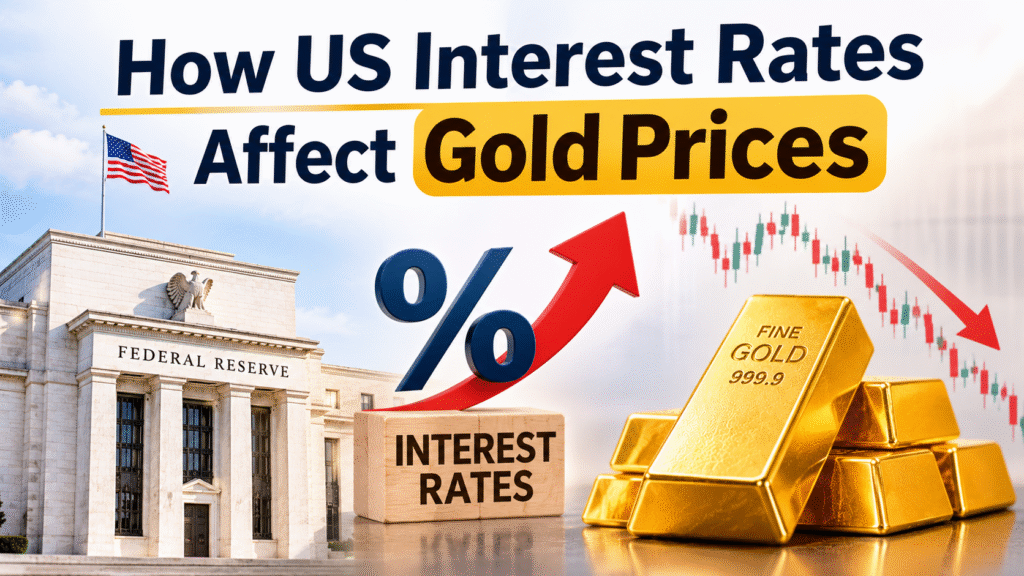
Gold has long been considered a safe-haven asset, especially during periods of economic uncertainty. While factors like inflation, geopolitical tensions, and currency movements influence Gold prices, one of the most significant drivers is the US interest rate cycle. Whether you are an experienced investor or just starting your journey with Gold investments, understanding how US interest rates impact Gold can help you make more informed investment decisions. Understanding this relationship can help investors make better decisions and build a more informed investment portfolio.
Why Do US Interest Rates Matter?
The US Federal Reserve adjusts interest rates to control inflation and support economic growth. These rate changes influence borrowing costs, consumer spending, bond yields, and the strength of the US dollar. Since Gold is priced globally in US dollars, any change in interest rates can directly or indirectly impact its price.
Here are some of the key ways interest rates affect Gold:
- Higher Interest Rates Increase the Opportunity Cost of Holding Gold: Unlike bonds or fixed deposits, Gold doesn’t generate regular income. When interest rates rise, investors may prefer interest-bearing assets that offer better returns, reducing demand for Gold in the short term.
- A Stronger US Dollar Can Pressure Gold Prices: Higher interest rates often strengthen the US dollar. As Gold is traded internationally in dollars, a stronger dollar makes it more expensive for buyers in other countries, which can reduce global demand and weigh on prices.
- Lower Interest Rates Make Gold More Attractive: When interest rates fall, returns on traditional savings and fixed-income investments decline. This often encourages investors to shift towards assets like Gold that can help preserve purchasing power over the long term.
- Inflation Expectations Can Override Interest Rates: Even during periods of rising interest rates, Gold may perform well if inflation remains high. Investors often buy Gold to protect their wealth when they believe inflation will erode the value of paper currencies.
- Economic Uncertainty Supports Gold Demand: Interest rate changes can influence economic growth. If aggressive rate hikes increase fears of a slowdown or recession, investors may move towards safe-haven assets like Gold despite higher interest rates.
Final Thoughts
Geopolitical tensions, central bank purchases, inflation trends, and global economic conditions all contribute to market movements. This is why investors often rely on a broader Gold price forecast instead of reacting to a single event. A comprehensive forecast considers multiple economic indicators to provide a clearer picture of where prices may be headed. Similarly, keeping track of the Gold market outlook helps investors understand long-term trends, changes in investor sentiment, and macroeconomic developments that could influence demand for Gold.


