Introduction
Precious metals have always been a trusted choice for investors looking to preserve wealth and diversify their portfolios. While gold has traditionally been the go-to safe-haven asset, silver and other precious metals are becoming increasingly relevant due to technological advancements and evolving global demand. As economic conditions continue to change, understanding the trends shaping this market can help investors make more informed long-term decisions.
What This Blog Is About
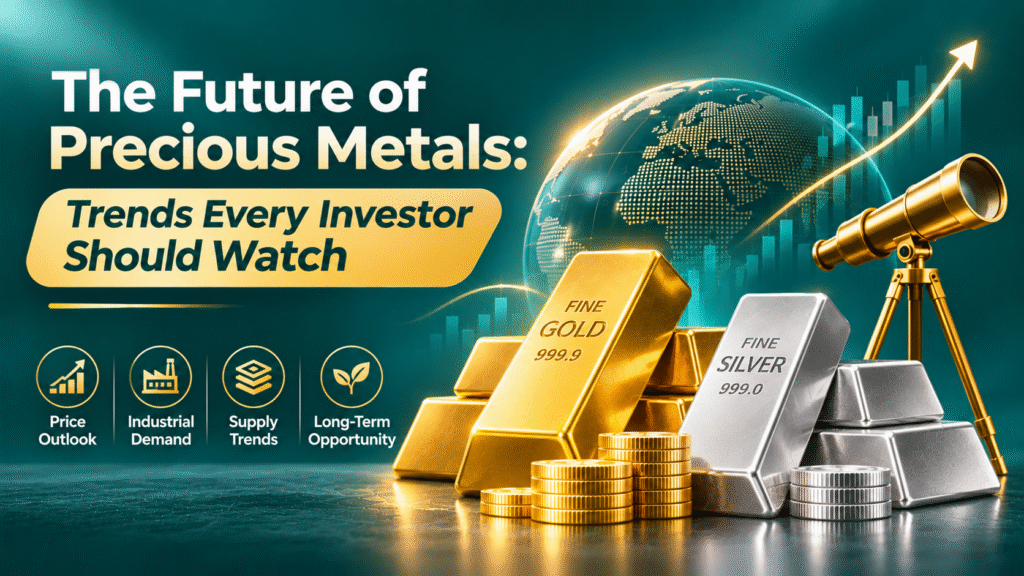
This blog explores the major trends that are expected to influence the future of precious metals. From economic uncertainty to industrial demand and digital investing, these developments could redefine how investors approach gold and silver in the years ahead.
Key Trends Shaping the Future of Precious Metals
- Economic uncertainty will continue to drive demand: Inflation, geopolitical tensions, and market volatility often push investors towards precious metals, particularly gold, as a store of value. During uncertain periods, these assets have historically helped preserve purchasing power and reduce portfolio risk.
- Central banks are strengthening gold’s position: Countries around the world continue to increase their gold reserves to diversify their holdings and reduce dependence on traditional reserve assets. This sustained institutional demand reinforces gold’s importance in the global financial system.
- Silver’s industrial demand is growing rapidly: Unlike gold, silver benefits from both investment and industrial demand. Its use in solar panels, electric vehicles, semiconductors, and advanced electronics is expected to increase as countries invest in clean energy and emerging technologies.
- Digital investing is making precious metals more accessible: Investors no longer need to purchase physical bars or coins to gain exposure to precious metals. Digital platforms have simplified investing by allowing individuals to buy, sell, and track gold and silver with smaller investment amounts and greater convenience.
- Portfolio diversification will remain a priority: Investors are increasingly including precious metals alongside equities, bonds, and other assets to create balanced portfolios. Gold offers stability during market uncertainty, while silver provides additional growth opportunities through industrial demand.
Why Investors Should Pay Attention
The precious metals market is no longer driven solely by jewellery demand or economic crises. Technological innovation, sustainability initiatives, and changing investment preferences are creating new opportunities for both gold and silver. Investors who understand these evolving trends can better position themselves to benefit from both wealth preservation and long-term growth.
Final Thoughts
The future of precious metals looks promising as global markets continue to evolve. Gold is likely to remain the preferred asset for stability and wealth preservation, while silver’s expanding industrial applications make it an attractive growth opportunity. Rather than viewing these metals as competing investments, investors should consider how each can contribute to a diversified portfolio. Keeping an eye on these emerging trends can help build a stronger investment strategy that is prepared for both market uncertainty and future opportunities.


