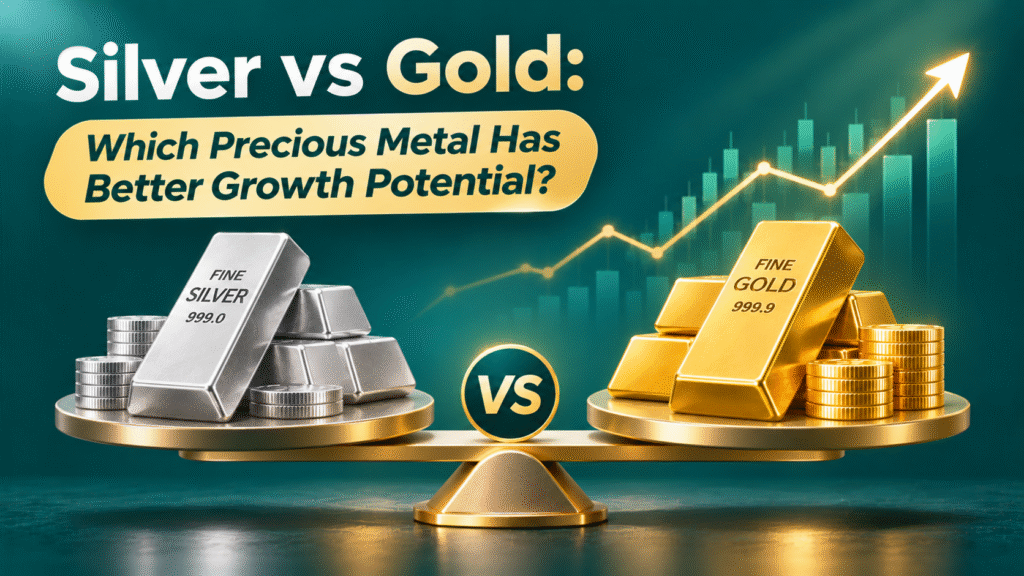
Gold and silver have long been part of the precious metals market, but they serve different purposes for investors. Gold is widely recognised as a store of value and a traditional hedge against economic uncertainty. Silver, on the other hand, has both investment and industrial demand, giving it another set of factors that can influence its price.
With investors increasingly exploring precious metals as part of their portfolios, the question is worth asking: between gold and silver, which one has greater growth potential?
What This Blog Is About
This blog compares gold and silver as investment options by looking at their demand drivers, price behaviour and potential outlook. It also explores what investors should consider before deciding whether to invest in silver or continue with gold.
Gold: Stability Meets Long-Term Demand
Gold’s appeal comes from its established position as a store of value. It tends to attract investor interest during periods of economic uncertainty, inflation concerns and market volatility. Central bank purchases and global investment demand can also influence gold prices.
For long-term investors, gold can be a part of diversification and wealth preservation. But its market is relatively mature, and its price movements are heavily influenced by global macroeconomic factors.
Silver: A Precious Metal With an Industrial Edge
Silver has an important characteristic that sets it apart from gold: industrial demand. It is used in solar panels, electronics, automobiles and several other applications. As investment demand combines with industrial consumption, silver can have multiple factors supporting its price.
This is one reason silver investment in 2026 is attracting attention. The expansion of renewable energy and technology-related industries could support long-term demand. At the same time, silver can be more volatile than gold, which means investors should be prepared for larger price fluctuations.
Silver Price Forecast: What Could Influence the Outlook?
Any silver price forecast needs to consider several variables rather than relying on past performance. Industrial demand, mine supply, global economic growth, interest rates and investor sentiment can all influence silver prices.
If industrial consumption continues to expand while supply remains constrained, silver could benefit from stronger demand. However, changing economic conditions can affect industrial activity and potentially create periods of price volatility.
“Should I Buy Silver Now?”
There is no universal answer to whether investors should buy silver now. The decision depends on individual financial goals, risk tolerance and investment horizon.
Investors seeking diversification within precious metals may consider silver because of its different demand drivers. However, those who prioritise stability and the traditional safe-haven characteristics of gold may prefer to maintain greater exposure to gold.
Rather than making a decision based solely on short-term price expectations, investors should consider how either metal fits into their overall portfolio.
Final Thoughts
Gold and silver offer exposure to the precious metals market, but their investment characteristics are different. Gold remains a widely preferred option for wealth preservation, while silver’s industrial applications give it an additional potential growth driver.
For investors considering investing in silver, the question should not be which metal yields higher returns. Understanding the inner workings of each metal, the volatility involved and the investment horizon can help you to make a more informed decision.


