When people think about precious metals, gold often gets most of the attention. But silver has quietly established itself as an asset that offers more than just a traditional store of value. From its role in industries such as electronics and renewable energy to its appeal as a precious metal, silver has several long-term metrics that can make it worth considering for long term investors.
However, understanding why silver can be useful in a portfolio requires looking beyond short-term price movements and focusing on its broader role in the economy and investment landscape.
Long-Term Silver Investments: How?
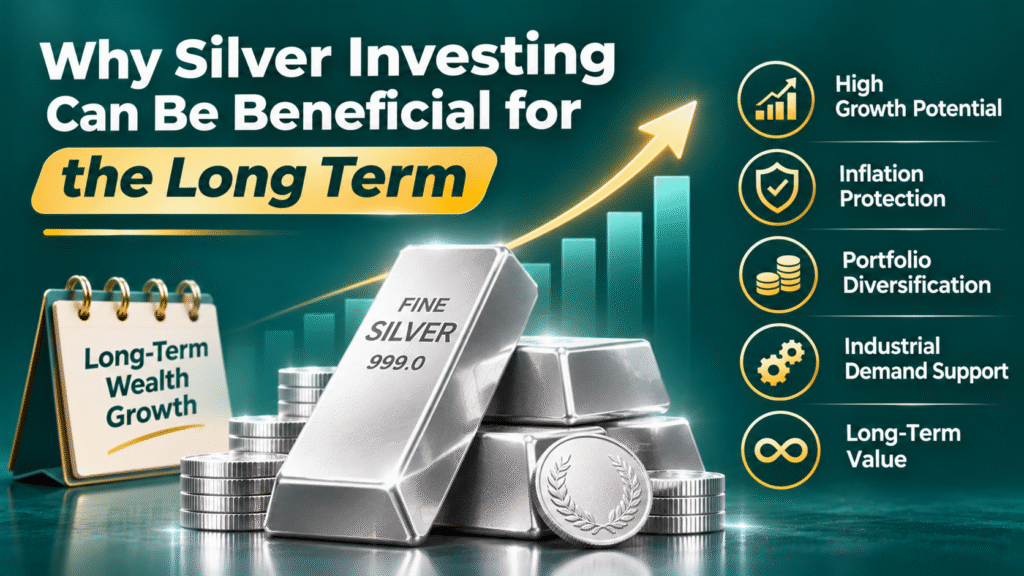
- Silver Can Add Diversification to a Portfolio: One of the primary reasons investors consider precious metals is diversification. A portfolio that relies heavily on equities or other financial assets can be exposed to market fluctuations. Adding silver can provide exposure to a different asset class. Silver does not always move in the same direction or at the same pace as stocks, bonds, or other investments. This makes it a potentially diversified long-term tool for investors building a portfolio with a long-term perspective.
- Silver Has Both Investment and Industrial Demand: Unlike many financial assets, silver has a dual identity. It is a precious metal, but it is also an important industrial commodity. Silver is used in electronics, solar technology, automobiles, medical applications, and several other industries. As technology and clean energy adoption continue in the long term, demand from these sectors can influence the long term outlook for silver. This industrial connection makes silver different from an asset whose value depends primarily on investor sentiment.
- Silver Can Offer an Accessible Entry Point: For investors who want exposure to precious metals, silver can be relatively accessible compared with gold. The lower price per unit allows investors to start with smaller amounts and gradually build their exposure over time. This can make silver particularly relevant for investors who are looking to diversify without allocating a large amount of capital to precious metals at once.
- Understanding Silver Rates Is Important: Anyone considering silver investing should keep an eye on silver rates. Silver prices can be influenced by several factors, including global economic conditions, industrial demand, mining supply, currency movements, long-term interest rates, and investor sentiment. However, long term investors should be careful about making decisions based solely on daily price movements. Instead, understanding broader trends and maintaining a clear investment horizon can help put short term fluctuations into perspective.
- Digital Silver Has Made Investing More Convenient: Technology has also changed how investors can access precious metals. Digital silver allows individuals to buy silver digitally without necessarily having to purchase and store physical bars or smaller amounts. For investors who prefer convenient, smaller-value transactions, digital formats can make silver more accessible. Before investing, however, it is important to understand the product structure, applicable charges, redemption options, storage arrangements, and regulatory framework.
Final Thoughts
Whether an investor chooses physical silver, digital silver, or another form of exposure, the objective should remain the same: understand the asset, evaluate the risks, and consider how it fits within the overall portfolio. Rather than asking whether silver will rise tomorrow, a better question for a long-term investor is how silver can contribute to a well-diversified investment strategy over time.


