Investing for the first time can feel overwhelming, especially when there are multiple asset classes to choose from. While stocks, mutual funds, and fixed-income products often receive attention, silver is another asset worth understanding. Used in jewellery, electronics, solar panels, and several industrial applications, silver has both investment and industrial value. Before exploring silver investments, first-time investors should understand how this metal works as an asset and what factors influence its price.
What Makes Silver an Investment Option?
Silver is a precious metal with applications across industries. Unlike gold, which is primarily associated with jewellery and investment demand, silver also plays an important role in manufacturing and technology. This combination of industrial and investment demand can influence its market value.
Investing in silver may appeal to individuals looking to diversify their portfolios. However, silver prices can fluctuate considerably, and their performance depends on several economic and industrial factors.
What Should First-Time Investors Know About Silver?
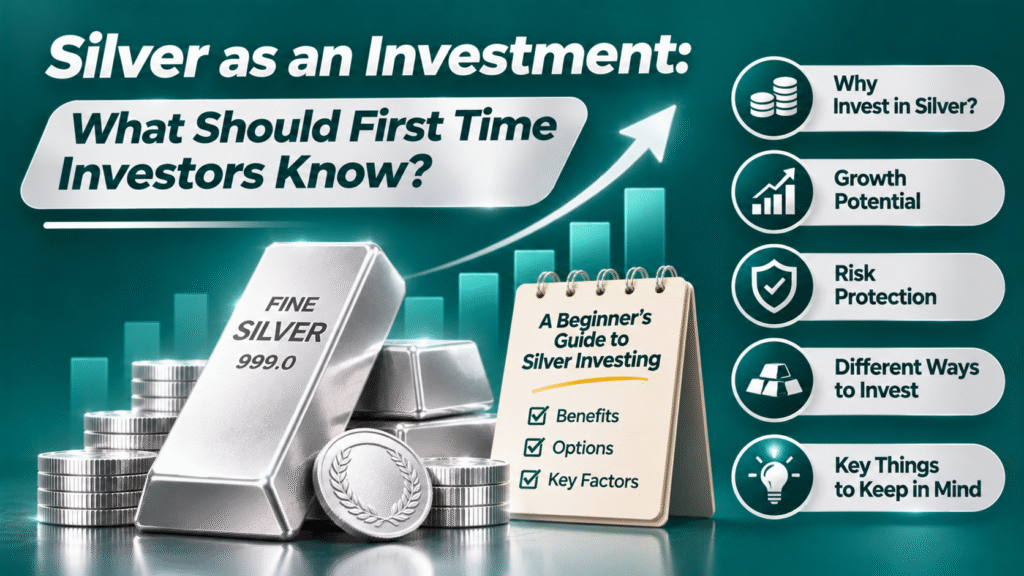
- Understand What Drives Silver Prices: Silver prices are influenced by global supply and demand, industrial activity, inflation expectations, currency movements, and investor sentiment. For example, growing demand for solar energy and electronics manufacturing can affect silver consumption. However, industrial demand alone does not guarantee rising prices. Understanding these factors can help investors make informed decisions.
- Explore Different Ways to Invest: There are several ways to gain exposure to silver. Physical silver, including coins and bars, allows investors to own the metal directly. Beginners can also start their investment journey through digital Silver. However, each option has different costs, storage requirements, liquidity considerations, and tax implications. Investors should compare these factors before choosing an approach that suits their needs.
- Consider Silver’s Price Volatility: Silver can experience significant price movements over short periods. Its relatively smaller market and sensitivity to industrial demand can contribute to volatility. First-time investors should avoid making decisions based solely on recent price increases or market excitement. Instead, consider your financial goals, investment horizon, and ability to tolerate fluctuations. Money needed for immediate expenses may not be suitable for an investment exposed to unpredictable price movements.
- Think About Portfolio Diversification: Silver can be considered as one component of a diversified investment portfolio. Holding different asset classes may help reduce dependence on the performance of a single investment. However, diversification does not eliminate market risk, and silver should not automatically replace other investments. The appropriate allocation depends on your financial circumstances, goals, and risk tolerance.
- Pay Attention to Costs and Liquidity: Before investing, understand the total cost of ownership. Physical silver may involve making charges, storage expenses, and differences between buying and selling prices. Financial products may have expense ratios, broking charges, and other applicable fees. Also, check how easily you can sell your investment and access the proceeds when required.
Final Thoughts
Silver can offer first-time investors an additional way to diversify their portfolios, but it requires careful evaluation. Understanding price movements, comparing investment options, and accounting for costs can help you approach silver investments more confidently. Rather than chasing short-term trends, focus on how silver fits into your broader financial strategy and make decisions based on your investment goals and risk tolerance.


