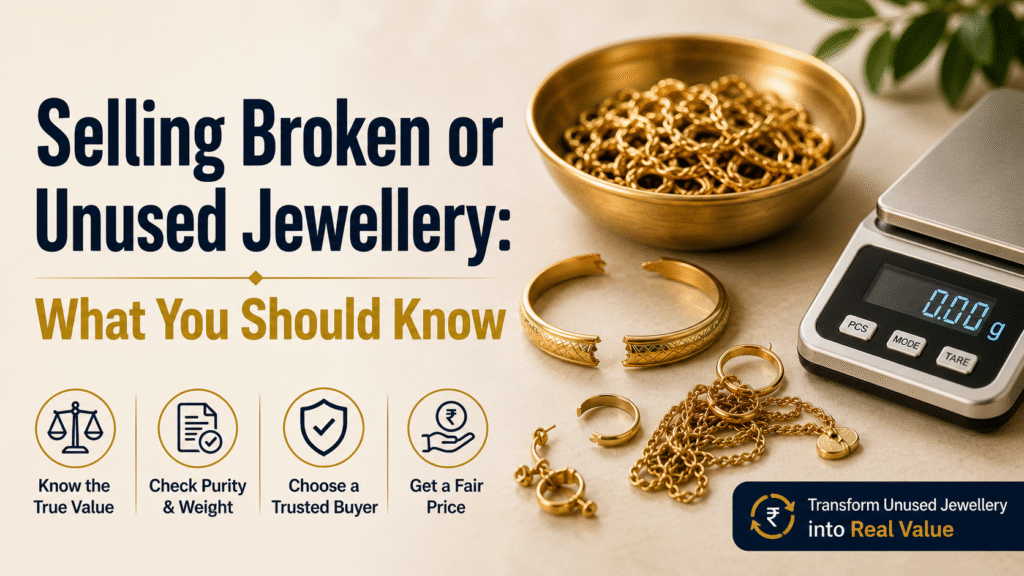
Most of us have a small box tucked away in a drawer containing a tangled Gold chain, a single earring whose partner is long lost, or a ring that simply no longer fits our style. While these items might seem like clutter, they represent a significant financial asset. In an era where the value of precious metals remains consistently high, understanding how to transition these forgotten pieces into liquid assets is a smart financial move.
Reviving Value from the Forgotten
So, in this blog, you will get to know about the practical and important steps to sell your Gold in the market. Whether you are looking to declutter or you just need funds, knowing the steps on how to sell old Gold effectively so that you can get the true market value for your items.
We will discover the evaluation process, how to identify trustworthy buyers, and common mistakes you need to avoid for a smoother transaction.
Key Considerations for a Smooth Transaction
When you decide to sell your old jewellery or Gold, you may find the process overwhelming. If you follow a structured approach, it can help you to get the maximum value of your Gold without any hassle.
- Understand the Purity (Karats): Gold is rarely sold in its pure form for jewellery; it is usually alloyed with other metals. Whether it is 14k, 18k, or 22k significantly impacts the price. Before visiting old Gold buyers, check for “hallmarks” or small stamps on the inside of bands or clasps that indicate the purity.
- Separate Stones and Sentiments: If your jewellery contains precious or semi-precious stones, remember that most buyers only pay for the weight of the metal. If the stones have value to you, consider having a jeweller remove them before you look for cash for old Gold.
- Track the Market Rate: Gold prices fluctuate daily based on global economic factors. Before heading out to sell your old Gold jewellery, check the current “spot price” online. While a buyer will take a small margin for their service, your offer should be a fair percentage of the day’s market rate.
- Verification and Transparency: A reputable buyer should always weigh your items in front of you using calibrated, certified scales. They should also be willing to perform a non-destructive test, such as an XRF (X-ray fluorescence) scan, to verify the Gold content without damaging the piece.
- Documentation Matters: In India and many other regions, legitimate businesses will require a form of identification (like an Aadhaar or PAN card) to complete the sale. This transparency protects both the seller and the buyer from unregulated trade.
Final Thoughts
The decision to start selling old Gold jewellery is often as much about emotional readiness as it is about financial timing. By doing your homework and choosing a transparent, verified partner, you can turn broken or unused items into a powerful tool for your current financial goals. Remember that Gold is a timeless store of value; even if the jewellery is broken, the underlying asset remains as precious as ever. Taking the time to understand the process ensures that your “hidden” assets provide the maximum benefit to your future.


