
Introduction
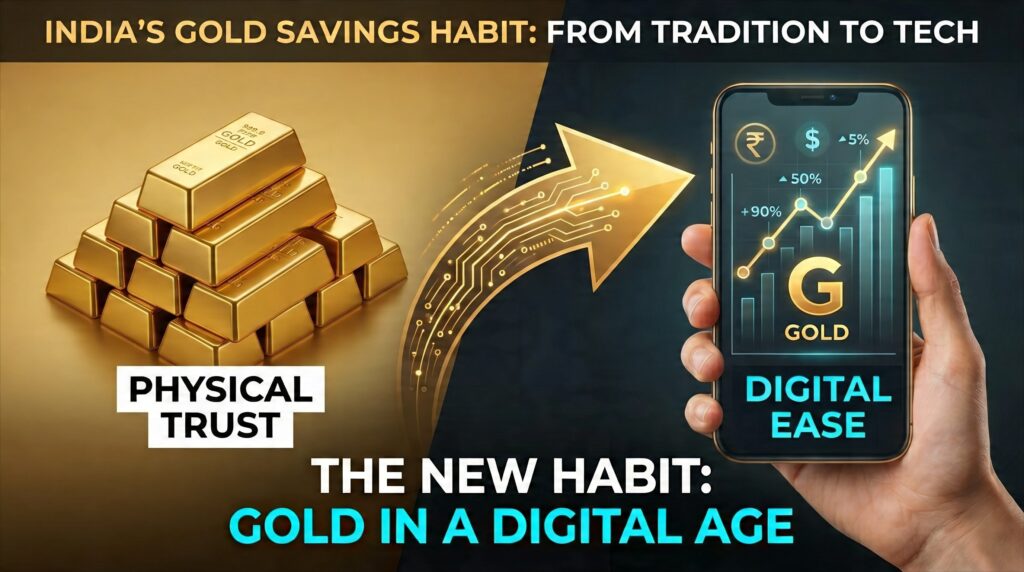
Gold has always been more than an investment in India. It represents security, emotions, and a sense of financial comfort passed down through generations. But as savings habits shift from physical to digital, Gold is also finding a new place in people’s financial lives. Today, the question is no longer whether Indians trust Gold. The real question is whether Gold can evolve into a part of India’s digital savings culture.
This blog explores how digital Gold is changing the way people save, why it aligns with India’s traditional mindset, and whether it has the potential to become a regular savings habit in the digital era. It looks at the role of technology, behaviour, and accessibility in shaping the future of Gold as a modern financial tool.
Why does Digital Gold fit India’s savings mindset?
For decades, Indians have preferred assets they can trust and understand. Gold has always been at the centre of that trust. Digital Gold carries the same familiarity but removes physical barriers. It allows people to save gradually, without worrying about storage, safety, or large upfront purchases. This shift transforms Gold from an occasional buying decision into a consistent saving behaviour. As financial habits become more app-driven, digital Gold naturally blends tradition with convenience.
- It allows small, regular savings instead of one-time large purchases.
- It removes concerns about the storage and safety of physical Gold.
- It makes Gold accessible to first-time and young savers.
- It supports disciplined saving through recurring investments.
- It builds confidence among people entering digital finance for the first time.
The role of technology in shaping a new savings culture
Technology has changed how India spends, invests, and saves. From instant payments to online investments, convenience has become the biggest driver of financial behaviour. Digital Gold fits into this ecosystem by making Gold available anytime, anywhere. It becomes easy to track, buy, and sell without visiting a store or making large financial commitments. Over time, this convenience encourages habit formation. People begin to see Gold not just as a festive purchase but as a regular financial step. This behavioural shift is what can eventually turn digital Gold into a cultural savings pattern.
Final Thoughts
Gold has always held emotional and financial value in India. What is changing now is the format, not the trust. Digital platforms are giving people a new way to interact with an age-old asset. If supported by awareness, transparency, and disciplined saving habits, digital Gold has the potential to become a meaningful part of India’s digital savings culture. It will not replace traditional investments, but it can become a familiar and reliable starting point for modern savers who want the comfort of Gold with the convenience of technology.


