Gold has always been regarded as one of the most trusted assets for preserving wealth. From ancient civilisations to modern financial markets, people have relied on Gold during uncertain times. However, if you regularly monitor Gold prices, you may notice that the rate varies almost every day. Many investors often wonder why this occurs and what factors influence these daily movements. Gold prices are affected by global economic trends, currency movements, market demand, and geopolitical developments.
Understanding why Gold rates fluctuate daily can help investors make more informed decisions and better gauge the timing of their investments. Let’s explore this in the blog.
Key Factors That Influence Daily Gold Price Movements
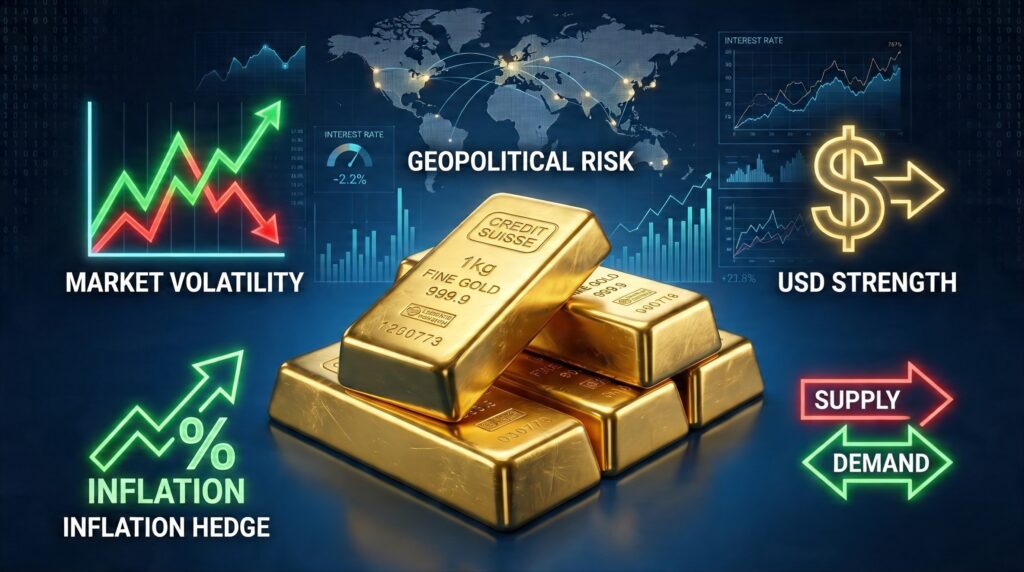
- Global demand and supply: Gold prices largely depend on how much Gold is being bought and sold worldwide. When demand for Gold rises, prices tend to increase. For example, during India’s festive and wedding seasons, demand for Gold typically goes up, which can push prices higher.
- Currency fluctuations, especially the US dollar: Gold is traded globally in US dollars. When the dollar strengthens, Gold prices often decline because it becomes more expensive for buyers using other currencies. Conversely, when the dollar weakens, Gold prices tend to rise as it becomes cheaper for international buyers.
- Inflation and economic uncertainty: Gold is widely regarded as a hedge against inflation. When inflation increases or when economic uncertainty heightens, investors often move their money into Gold to protect their wealth. For instance, during global financial crises or periods of high inflation, Gold prices tend to climb.
- Interest rates set by central banks: Interest rate decisions by major central banks also influence Gold prices. When interest rates rise, investors may prefer interest-bearing assets such as bonds or savings instruments, which can reduce demand for Gold. When rates are low, Gold becomes a more attractive alternative investment.
- Geopolitical tensions: Events such as wars, political instability, or global tensions often drive investors towards safe-haven assets like Gold. For example, during major geopolitical conflicts or global uncertainties, Gold prices tend to increase as investors seek stability.
Final Thoughts
Daily fluctuations in Gold prices are a natural aspect of how global financial markets operate. Gold is influenced by a wide array of factors, including economic conditions, currency movements, investor sentiment, and global demand. For long-term investors, short-term price changes should not always be cause for concern. Instead, Gold should be viewed as a strategic asset that helps diversify a portfolio and provides stability during periods of uncertainty. By understanding the factors that influence Gold prices, investors can approach Gold investments with greater confidence and clarity.


